
You save a photograph of a man in a dark jacket, pale shirt and roomy trousers. Later you try a dark jacket of your own, and the complete outfit feels different from what you imagined. Look at the photograph again. Perhaps you enjoyed the open neckline, the short upper boundary, the textured surface or the shoes beside the broad trouser opening. Several features may have contributed.
A reference becomes more useful when you can describe the part you want to explore. This guide gives you five ways to do that and a worked exercise using familiar clothes. You can enjoy several directions and choose among them for different occasions. The aim is a practical description of your preferences that helps with dressing and a future purchase.
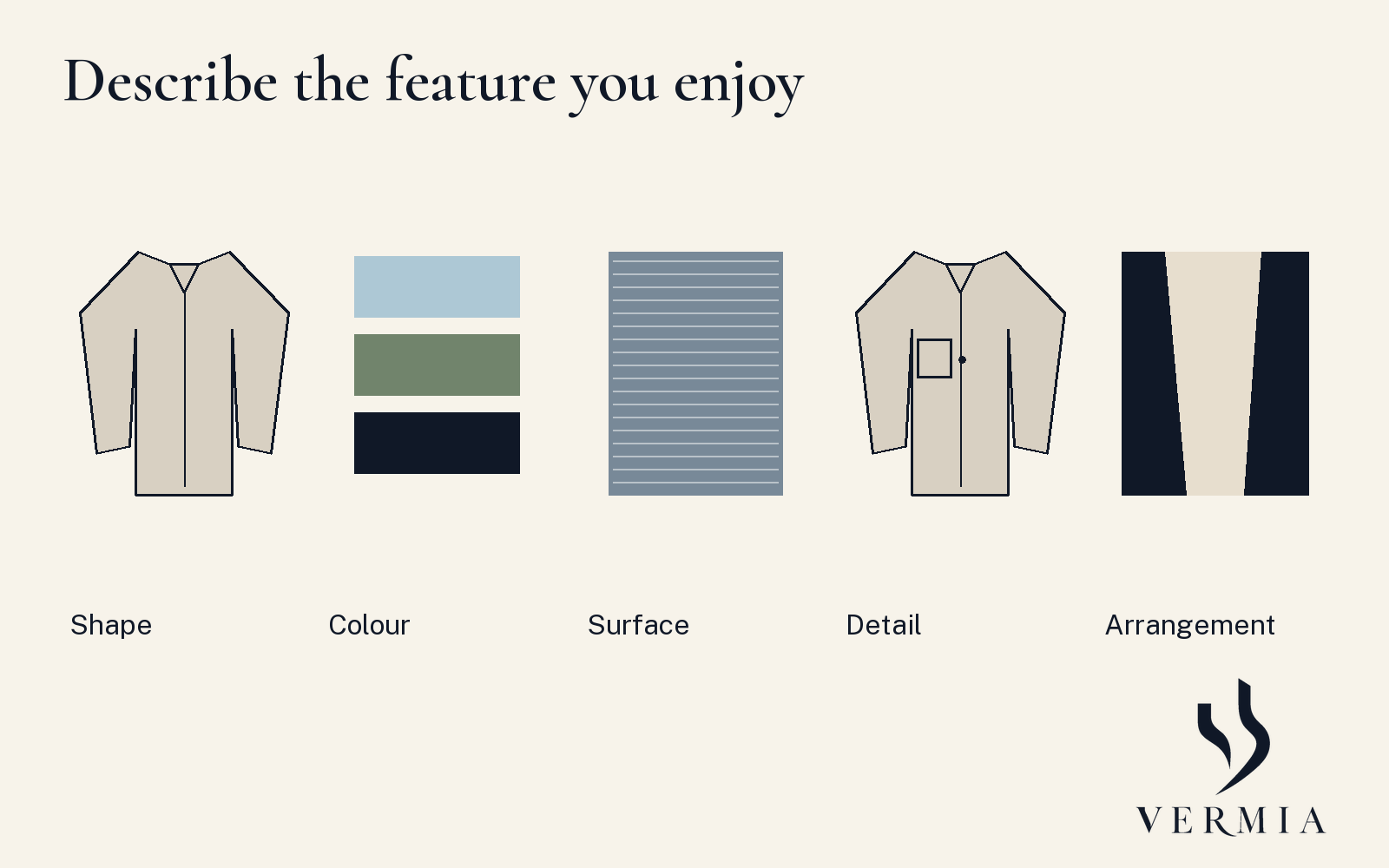
Choose references for a part of your life
Begin with three outfit references that interest you for a specific use, such as informal workdays or evening meals. They can be photographs you have saved privately or combinations you already wear. You do not need to build a large mood board. A small group gives you enough material to compare recurring features while keeping the exercise manageable.
Note what the image actually shows and what remains unknown. You may see an appealing surface without knowing its fibre, weight or comfort. A seated photograph may hide trouser length and footwear. The lighting and setting can contribute to the impression. Keep those gaps visible, so an attractive image does not become a list of unverified product properties.
For private reference, retain the original source link where available. If you later share a mood board or publish an article, check rights for that use separately. Saving a reference and republishing a photographer's work involve different permissions. You can also describe the feature in words or create an original explanatory drawing instead of copying the source image.
Shape: look at width and length separately
Ask where the garments end and how their outlines relate. A broad short overshirt and a broad long overshirt share room through the body while creating different upper boundaries. A shorter close-fitting knit and a shorter roomy top share an endpoint while supplying different widths. Naming those differences gives you more useful information than the general word relaxed.
Try the same distinction in your wardrobe. Compare a roomy shirt tucked and untucked, then a shorter top. Keep the trousers and shoes steady where possible. You may enjoy the room of the shirt but prefer another endpoint. Write that combination of preferences down. A future search for a roomy, shorter top is more specific than simply searching for relaxed clothes.
Include the lower edge. A straight, curved or banded hem can behave differently at a similar length. If you enjoy a short top but dislike the way a tight band sits, record both observations. You can preserve the desired endpoint while considering another edge treatment. One feature need not stand in for the whole garment category.
Colour: describe the relationship
Look for colour family, relative depth and strength. You might enjoy a pale blue centre within a dark navy frame, a close arrangement of darker colours, or one vivid upper piece with quieter trousers. Those are different relationships. A saved image labelled blue jacket leaves much of the decision unresolved. The actual version of blue and its surroundings both matter.
Use ordinary comparison words without pretending they are calibrated fabric measurements. The CIE's vocabulary distinguishes hue, lightness and chroma and recognises the role of viewing conditions. For this exercise, a phrase such as medium muted blue is enough to begin. View your own garments together in a relevant setting before deciding whether a screen reference translates into a combination you enjoy.
You can retain several colour preferences. A lighter centre may serve one outfit while a quieter dark arrangement serves another. Keep the situation and complete garments with each note. There is no requirement to reduce your wardrobe to one palette or explain a preference through an assumed personality trait. The record describes what you enjoy wearing.
Surface: identify the appearance that attracts you
Describe what you can see: a fine knit, a visible weave, a smooth field or a prominent raised structure. Then note its area. You may enjoy a textured jacket around a plain inner top, or a textured knit with a quieter outer layer. The same surface can play different roles depending on how much of it appears in the complete outfit.
When you encounter the garment in person, add touch and use as new information. A surface you enjoy in a photograph may feel different from what you expected. Check the composition and care information, and assess comfort in the way you will wear it. A visual preference is a useful starting point alongside those practical questions.
If two references share a colour but differ in surface, compare that difference directly. Perhaps the texture is the recurring feature that interests you. An original trial could pair a visibly knitted blue top with charcoal trousers, then a smoother blue shirt with the same trousers. Record which arrangement you would repeat and what you enjoyed about it.
Detail: locate the feature
Look at pockets, closures, seams, buttons, collars and repeated marks. Imagine two similarly coloured overshirts with similar shapes. One has a quiet front; the other has two large pockets and contrasting buttons. If you prefer the second, name those details. If you prefer the first, name the quieter arrangement. The observation can guide another comparison while keeping colour and shape in view.
You can also enjoy one prominent detail and want another to recede. Perhaps the large pocket appeals, while you would prefer buttons closer in colour to the cloth. That is a specific description to carry into a search. It avoids treating a general garment name as a guarantee that all versions will supply the same visual character.
Arrangement: describe how the clothes are worn
A jacket open over a light shirt creates a different view from the same jacket fastened. A tucked shirt reveals the waistband; an untucked shirt introduces a lower boundary. A scarf can replace much of the inner colour near the face. Record those arrangements when they contribute to the reference you like. They can be easier to explore than a new purchase.
Try one familiar outfit in two wearing modes that suit the garment and occasion. Take a private reference photograph if useful, with a reasonably steady view. The purpose is to remember a configuration you have also seen and experienced directly. Include enough information to recreate it: neckline, tuck, state of closure and intended shoes.
A worked example: three references, one useful brief
Imagine your three references share room through the upper garment, muted blue or green, a visible surface and a light inner centre. They differ in setting and trouser shape. You might begin with the features that recur, then try a roomy muted green overshirt over an ivory top with charcoal trousers. This is a hypothetical styling proposal using imagined clothes that fit.
Once dressed, you may enjoy the colour and room but prefer a shorter upper boundary. Your brief can now read: muted green or blue upper layer, room through the body, a shorter endpoint, visible texture and enough opening to show the ivory inner top. That is a set of preferences you can compare against an actual garment.
Next add practical requirements: the layer must work with the clothes already chosen, feel comfortable over the inner top and suit the situations where you expect to wear it. Check supplied material and care information separately. The brief now connects the image's appeal with your actual life. It can help you test a piece you own before deciding whether an addition is useful.
Keep the description open to experience
Wear a version you like and add one observation afterwards. You may discover that the open layer is comfortable at a desk but the bag changes how it sits during the commute. You may enjoy the textured surface in a smaller visible area. Use that information to refine the note. Personal style becomes easier to describe through specific experiences and choices.
Carolyn Mair's interview with the American Psychological Association offers expert discussion of clothing, identity and choices. It provides context for taking personal preferences seriously; it does not validate this five-part exercise as a psychological assessment. You can use the exercise as an ordinary decision aid, keeping what helps you and adapting it as your circumstances change.
Take the brief to a real comparison
When you see a candidate garment, compare it with the words you wrote. Does it supply the room, endpoint, colour and visible detail you wanted? Try it with the intended companion pieces. If it differs from the brief, decide whether you enjoy that difference after seeing the complete result. The brief supports your choice; you can revise it when an actual garment reveals another arrangement you would happily wear.
Sources
- American Psychological Association, Psychology of fashion, with Carolyn Mair, PhD, episode 83. Primary expert interview transcript, not an experimental report or validation of the exercise.
- CIE, perceived colour, e-ILV 17-22-040. Technical colour vocabulary and viewing context.
The five-part description, worked wardrobe example and personal brief are original editorial exercises. No clothes-to-personality diagnosis or measured wellbeing effect is claimed.