
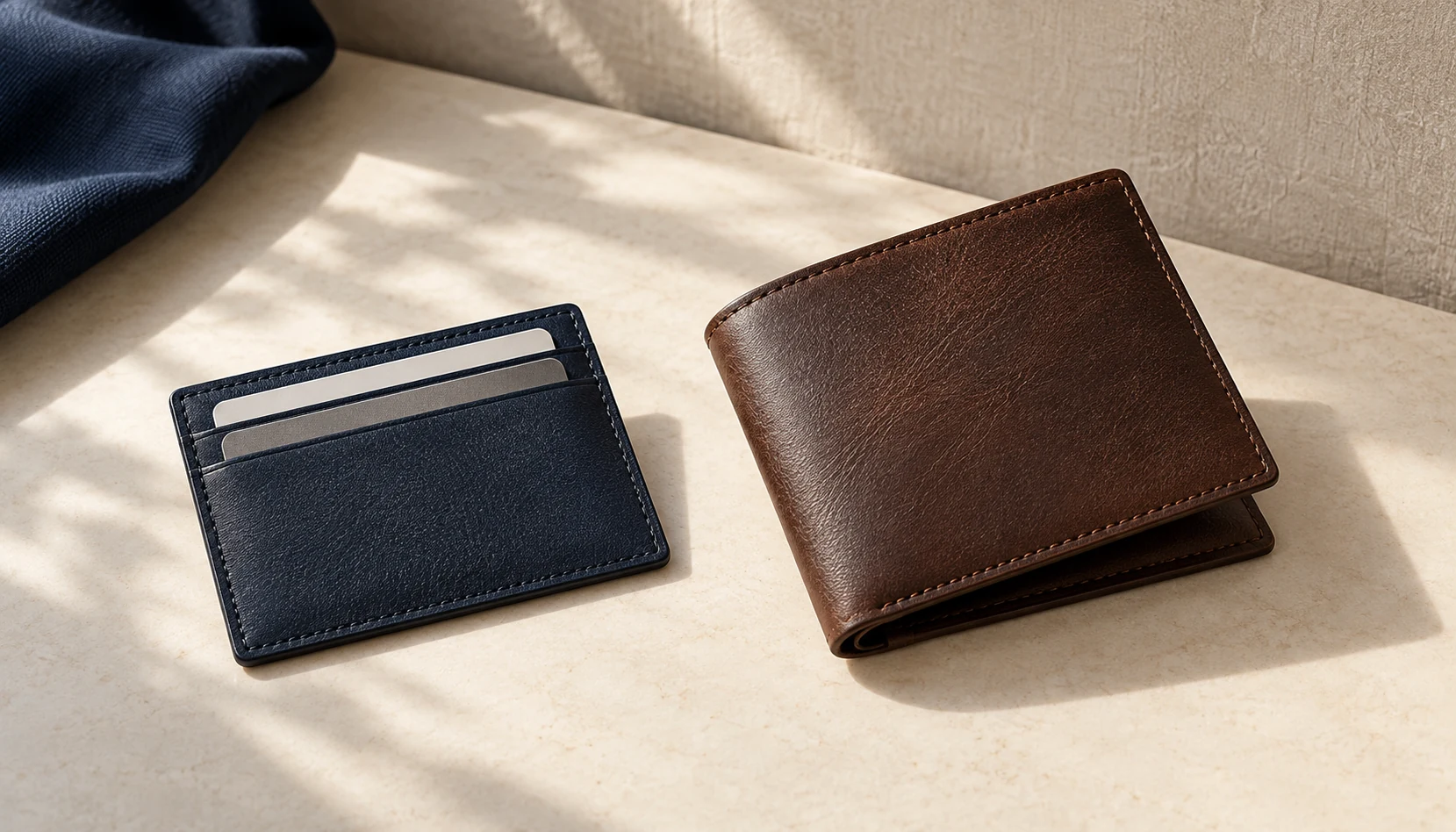
A metro card, a bank card, your driving licence and a few notes for the day. For some men, that is the whole list. For others, cash, coins and receipts are part of an ordinary working day too.
Choosing between a card holder and a wallet starts with that small collection. A card holder can suit a day built around a few cards and phone payments. A wallet with a note compartment gives cash its own space. The useful choice is the one that feels comfortable to carry and easy to use throughout your day.
Start with what you carry
Empty your current wallet onto a table. Set out the cards, notes and other items you use during an ordinary week.
You might find that your everyday set is a bank card, a travel card and an ID. You might also use cash regularly for parking, local purchases or part of your commute. Make room for what supports your routine.
Then separate anything you carry for a particular occasion, such as an extra card used only when travelling. This gives you a clearer picture of what your everyday holder needs to do.
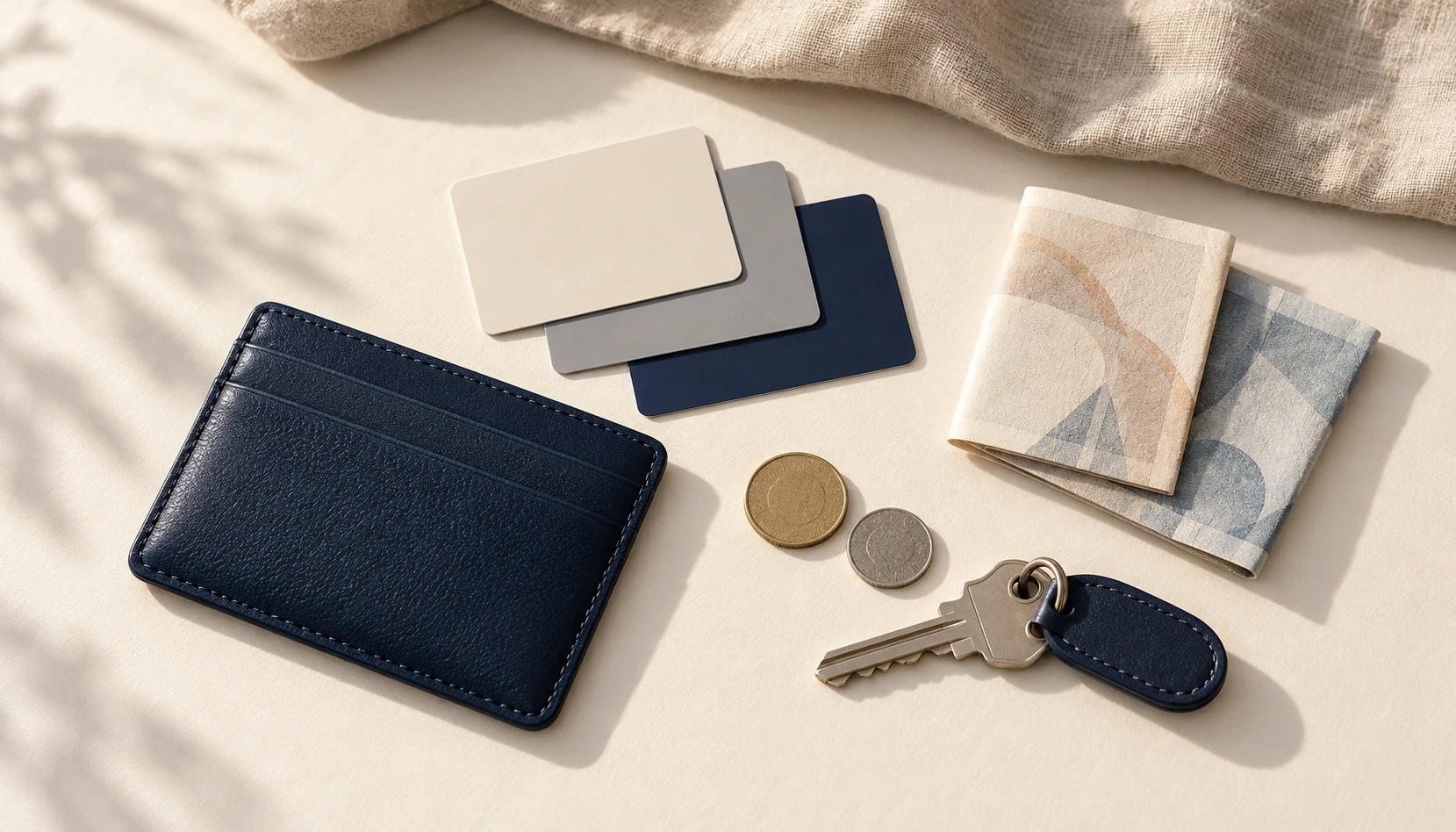
What is the difference between a card holder and a wallet
A card holder centres its storage on cards. It may be a soft sleeve, a case or a small folding design. Check whether the particular model also has space for folded notes.
A wallet can offer separate compartments for cards and banknotes. Some designs add a coin pocket or space for receipts. The layout matters as much as the name on the label.
Capacity also varies within each type. Check the stated capacity against the cards you carry, including any thicker or embossed cards. Look for a clear description of what fits in each slot or compartment.
| Your everyday need | What to look for |
|---|---|
| A few cards and occasional cash | A card holder with enough usable slots and a suitable note pocket |
| Regular access to banknotes | A wallet with a dedicated note compartment |
| Coins during the day | A secure coin compartment or a separate coin pouch |
| A mix of workdays and travel | Storage that covers the day, with extra capacity only when useful |
When a card holder fits your day
If you usually pay by phone and reach for only a few physical cards, a card holder is worth considering. Think about the moments you will use it: taking out a travel card at the station, showing an ID or paying when you prefer to use a bank card.
Check how easily your most-used card comes out. Look at where any backup cash will sit. If carrying a few notes matters to you, include them when assessing the holder's capacity.
An advertised card count is a starting point. The more useful question is whether your actual combination fits comfortably and stays secure.
When a wallet gives you useful space
A wallet may suit you if notes are part of several transactions during the day, or if you prefer cards and cash in separate sections.
Look closely at the internal layout. A dedicated note compartment is useful if you regularly carry cash. Check how easily you can reach your notes and whether the card slots keep your everyday cards organised.
If coins matter, check for a coin compartment specifically. If you keep receipts temporarily, decide where they will go and when you will clear them out. A layout that matches those habits is easier to assess than a photograph of an empty wallet.
Check the fit where you carry it
Consider the pocket or bag you use most days. A holder that works in a roomy trouser pocket may feel different in a fitted pair of trousers. A wallet carried in a work bag raises different questions about access and organisation.
Where possible, try the holder with its intended contents. Check it while standing and sitting. Reach for the card you use most. If you are buying online, compare the stated dimensions with your current wallet and read the return terms before ordering.
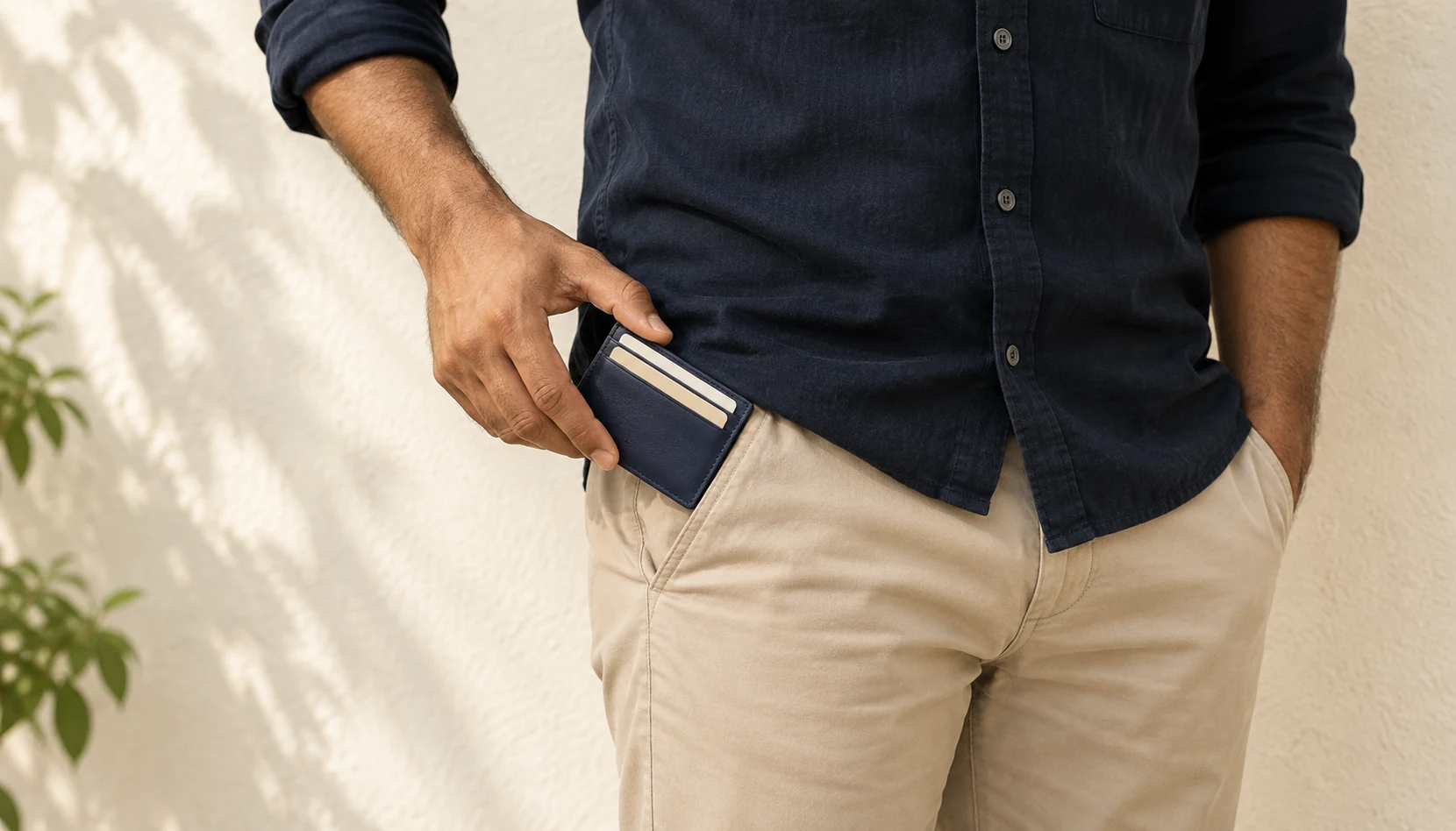
Choose the colour, texture and finish you enjoy once the practical fit feels right. A small object you handle every day can reflect your taste in a quiet, personal way.
Try a week with your everyday essentials
Before buying, use your existing wallet to learn what you need:
- Keep the cards, cash and other items you expect to use that week.
- Notice which items you reach for and which stay untouched.
- Note any time you need more space, easier access or a better place for change.
- Include a workday and a day off so the choice reflects both.
At the end of the week, you may have a clear reason to try a card holder. You may find that a well-arranged wallet already suits you. Either result gives you a useful basis for your next choice.
Make the choice around your life
Choose a card holder when its storage fits what you carry and you enjoy its compact format. Choose a wallet when separate space for cash and other essentials makes your day easier.
Start with your routine, check the fit and let your own taste finish the decision. The right detail should feel at home in your life.